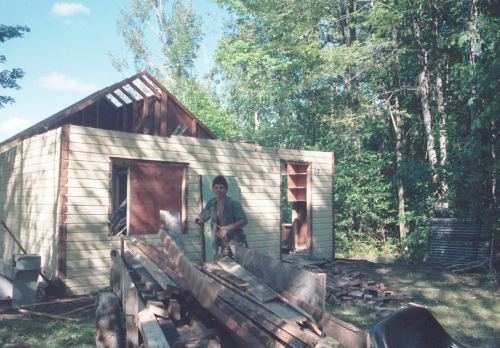
 I always liked to use a big car trailer hooked to the garden tractor to move
the lumber around with. It was low to the ground, had little to damage,
and was easy to maneuver close to a building.
I always liked to use a big car trailer hooked to the garden tractor to move
the lumber around with. It was low to the ground, had little to damage,
and was easy to maneuver close to a building.
But back in the 1980s, at my parents Amogla camp, we dismantled the old cottages by hand. Not only did this avoid having to pay somebody to take it away, but we were able to reclaim a lot of building materials to reuse them for building new cottages
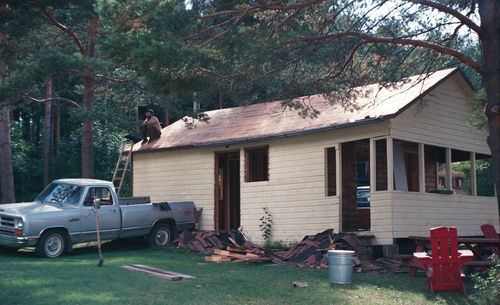 We'd start by stripping the interior down to the bare studs. Most of the cottages had
drywall on the inside, but it was pre-finished drywall attached with finishing nails,
so it came out relatively easily.
We'd start by stripping the interior down to the bare studs. Most of the cottages had
drywall on the inside, but it was pre-finished drywall attached with finishing nails,
so it came out relatively easily.
The next activity was to strip the shingles off the roof. An ordinary shovel
was pretty good for this. In the early 1980s, we'd burn the asphalt shingles.
But burning them was a bit scary. They burned very intensely and hot.
In later years we took the shingles to the dump.
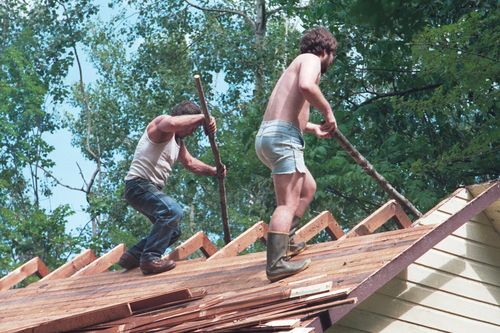 Next was stripping off the roof boards. A long pole worked best for doing
that work with, as it resulted in the least amount of splintering of the
roof boards.
Next was stripping off the roof boards. A long pole worked best for doing
that work with, as it resulted in the least amount of splintering of the
roof boards.
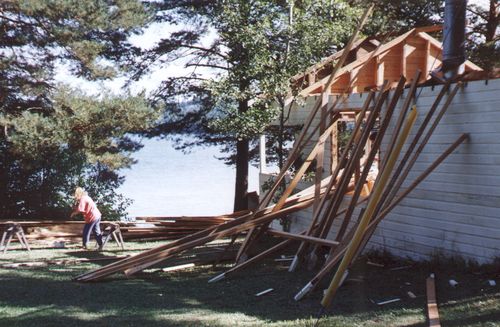 None of the old cottages used roof trusses, so the rafters were pretty easy
to remove and reuse for lumber.
None of the old cottages used roof trusses, so the rafters were pretty easy
to remove and reuse for lumber.
I always liked to use a big car trailer hooked to the garden tractor to move
the lumber around with. It was low to the ground, had little to damage,
and was easy to maneuver close to a building.
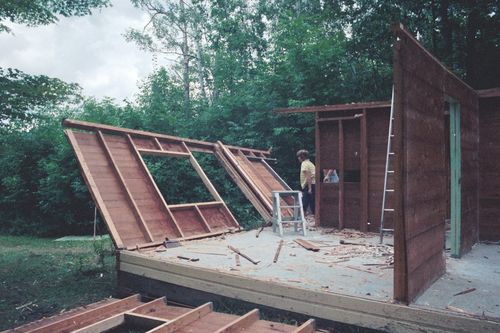 Next we'd knock the walls apart at the corners, and then knock the whole walls
down onto the ground.
Next we'd knock the walls apart at the corners, and then knock the whole walls
down onto the ground.
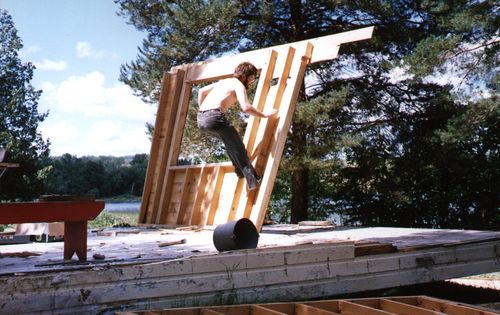 It was fun to take a running leap at the walls to knock them down!
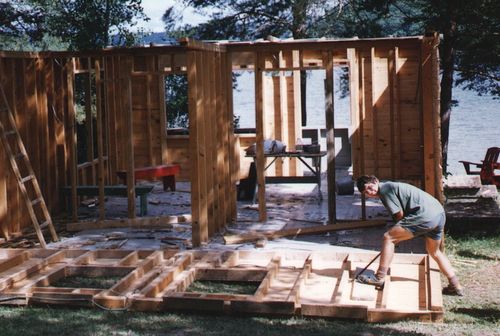 At some point, I had discovered that it was much more effective to pry the studs off
the boards than it was to pry the boards off the studs.
At some point, I had discovered that it was much more effective to pry the studs off
the boards than it was to pry the boards off the studs.
I'd lay down a piece of 2x6 next to the stud and then use a long crowbar to
lift the studs off the boards. This involved a lot of force because I was
effectively pulling ten nails at once.
But the advantages were that it was quicker, and, more
importantly, didn't splinter the boards as they came off. Splintered boards
were just messy garbage to be burned, but whole boards could be reused.
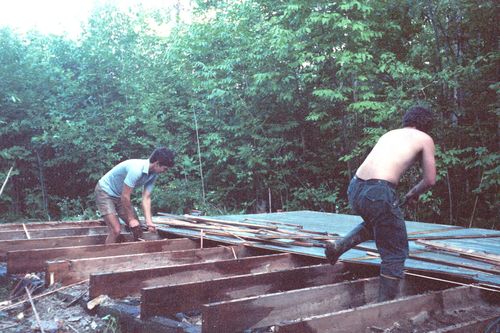 Next came pulling the floorboards off. Most of these cottages had painted hardwood
flooring. What a shame, really. But back in the 1950s and 1960s, that was probably
the cheapest option available. This cottage
had the hardwood flooring straight on the joists. Most of the other cottages
at least had subfloor.
Next came pulling the floorboards off. Most of these cottages had painted hardwood
flooring. What a shame, really. But back in the 1950s and 1960s, that was probably
the cheapest option available. This cottage
had the hardwood flooring straight on the joists. Most of the other cottages
at least had subfloor.
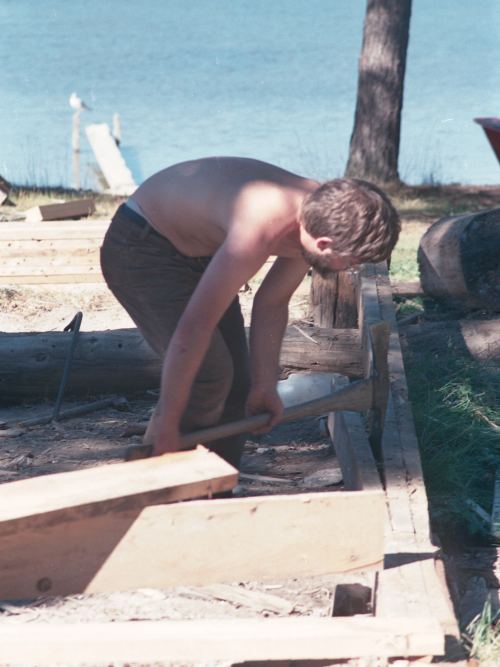 A pick style axe was the most useful tool for prying apart nailed together floor
joists and other larger pieces of wood. It was actually one of the tools of choice.
A pick style axe was the most useful tool for prying apart nailed together floor
joists and other larger pieces of wood. It was actually one of the tools of choice.
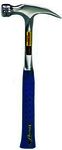 But the most used tool during demolition were the really long Estwing claw hammers
with the straight claws. Because the claws were straight, you could just
whack the hammer between two boards, and then move the handle side to side
to separate them. If it was hard to get it in, you could just use another hammer
to pound the first hammer in. The head and handle were forged out of a single
piece of steel, and with all the abuse we gave those hammers, we never broke one.
But the most used tool during demolition were the really long Estwing claw hammers
with the straight claws. Because the claws were straight, you could just
whack the hammer between two boards, and then move the handle side to side
to separate them. If it was hard to get it in, you could just use another hammer
to pound the first hammer in. The head and handle were forged out of a single
piece of steel, and with all the abuse we gave those hammers, we never broke one.
We also had this long crowbar with a very wide nail pulling end. The wide end made it useful for levering stuff apart by moving it side to side.
A sledgehammer also came in handy. And on rare occasions, we'd use a chainsaw.
But using a chainsaw was hardly worth it. You'd always have to be so careful
about not hitting nails, and knocking things apart with a sledgehammer was
usually quicker. So most of the cottages were dismantled entirely by hand.
I guess nowadays doing stuff with hand tools is fashionable again, but that sort
of work is hardly what comes to mind for today's hand tool enthusiasts.
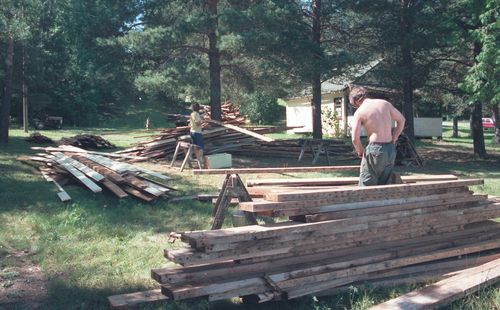 After the cottage was leveled came the slower task of pulling all the nails
out of the lumber. Most of the lumber would get recycled in
building new cottages
After the cottage was leveled came the slower task of pulling all the nails
out of the lumber. Most of the lumber would get recycled in
building new cottages
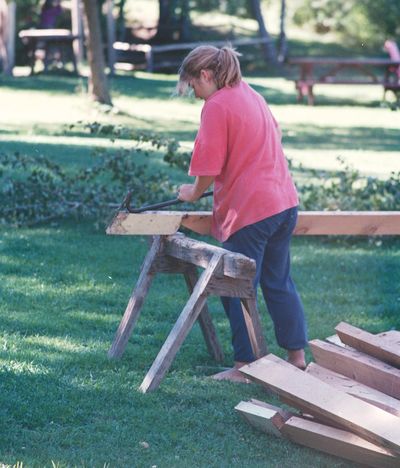
In the early 1980s, we'd recycle all the old nails. As we kids got older and got a little bit more say, we'd throw out a small fraction of the nails - those that were just too bent out of shape and couldn't quickly be straightened with a hammer and anvil.
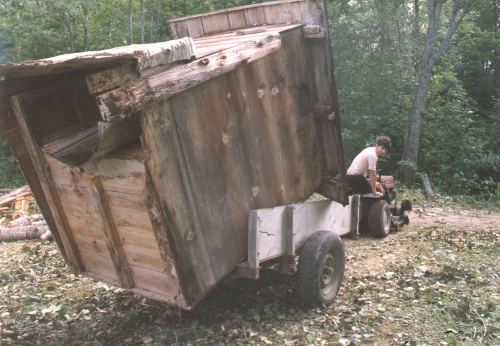 We didn't always recycle the outhouse. This outhouse, we just tipped onto
a trailer and drove it to the spot where we burned a lot of scraps.
We didn't always recycle the outhouse. This outhouse, we just tipped onto
a trailer and drove it to the spot where we burned a lot of scraps.
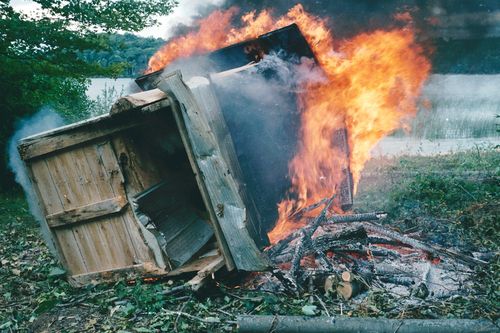 Kind of fun watching an outhouse burn!
More home improvement projects on my website.
