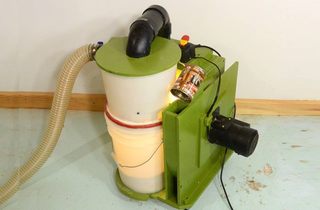
 After building my first small dust collector I started
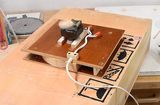
obsessing over how much dust is actually in the air. So I built my
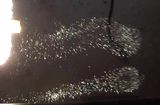
dust photographing box. That box is always able to pick up
some airborne dust, but it's difficult to quantify. It's been suggested that I write
a program to count the particles, but that's actually far easier said than done, once
you consider black-level shifts, out of focus particles, overlaps, etc.
After building my first small dust collector I started
obsessing over how much dust is actually in the air. So I built my
dust photographing box. That box is always able to pick up
some airborne dust, but it's difficult to quantify. It's been suggested that I write
a program to count the particles, but that's actually far easier said than done, once
you consider black-level shifts, out of focus particles, overlaps, etc.
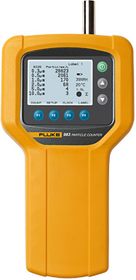 So I put a $500 bid on a fluke particle counter on an E-bay, but it sold for $2000.
Those things cost over $4000 new.
So I put a $500 bid on a fluke particle counter on an E-bay, but it sold for $2000.
Those things cost over $4000 new.
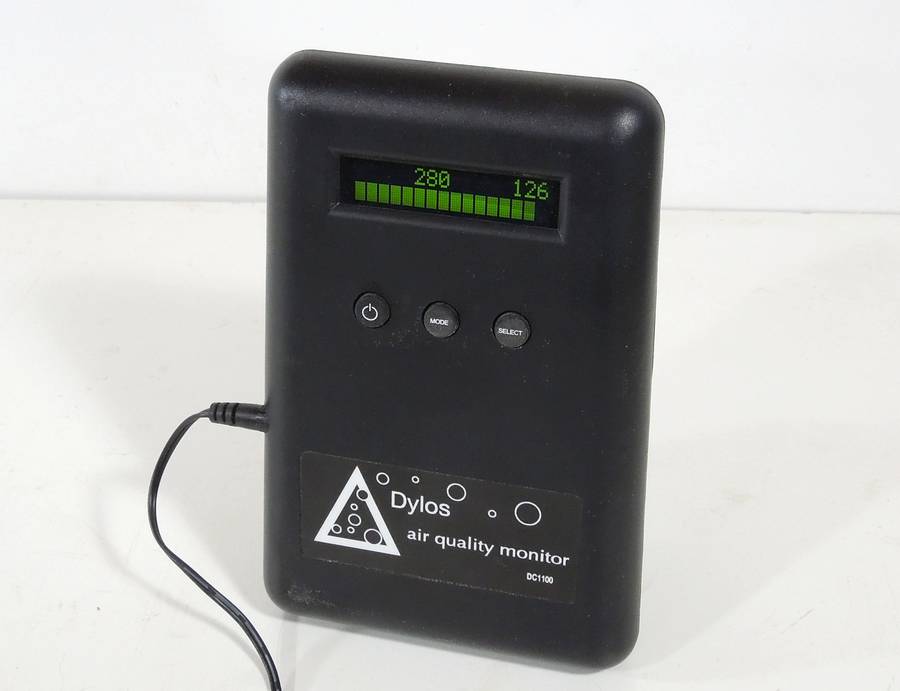
Then I found out about the Dylos air quality monitor. This is essentially a relatively low-cost consumer-grade particle counter.
 I bought the Dylos pro. That unit displays two counts. The first count is for
particles 0.5 to 2.5 microns in size per 0.01 cubic foot, the second is
for particles larger than 2.5 microns per 0.01 cubic foot. It cost $300
I bought the Dylos pro. That unit displays two counts. The first count is for
particles 0.5 to 2.5 microns in size per 0.01 cubic foot, the second is
for particles larger than 2.5 microns per 0.01 cubic foot. It cost $300
It's not as sensitive as professional particle counters, which can detect down to 0.3 micron.
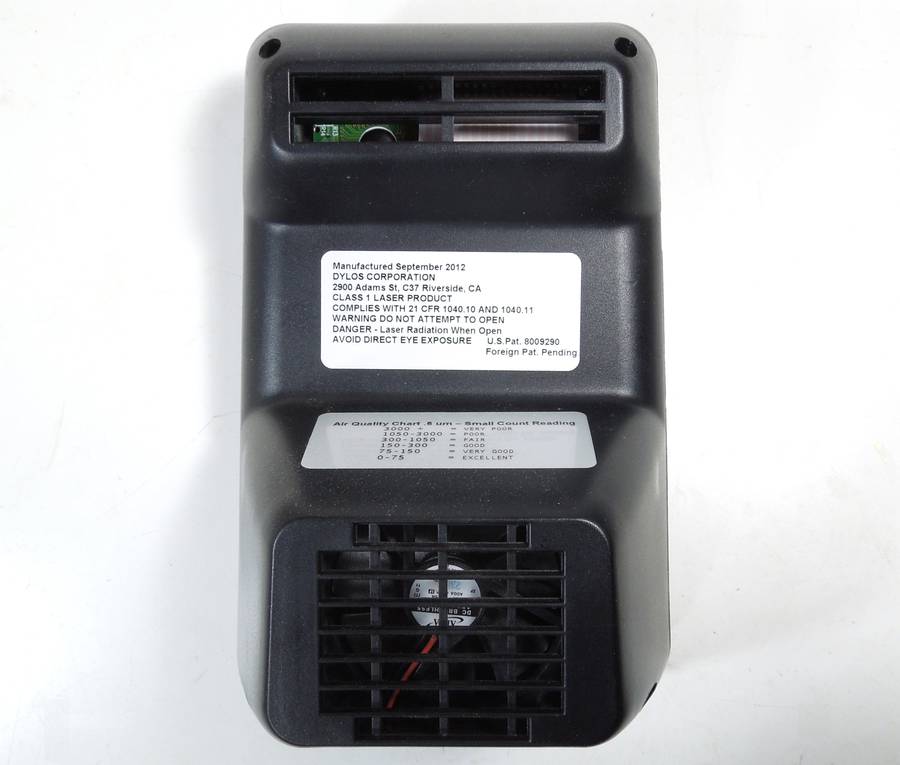
It's a fairly light-weight thing made mostly out of plastic. Where "proper" particle counters use some sort of pump to pump a controlled volume past the detector, the Dylos just uses a small CPU fan in the back of the case.
It says "WARNING DO NOT ATTEMPT TO OPEN" on the back, but that never stopped me from looking inside...
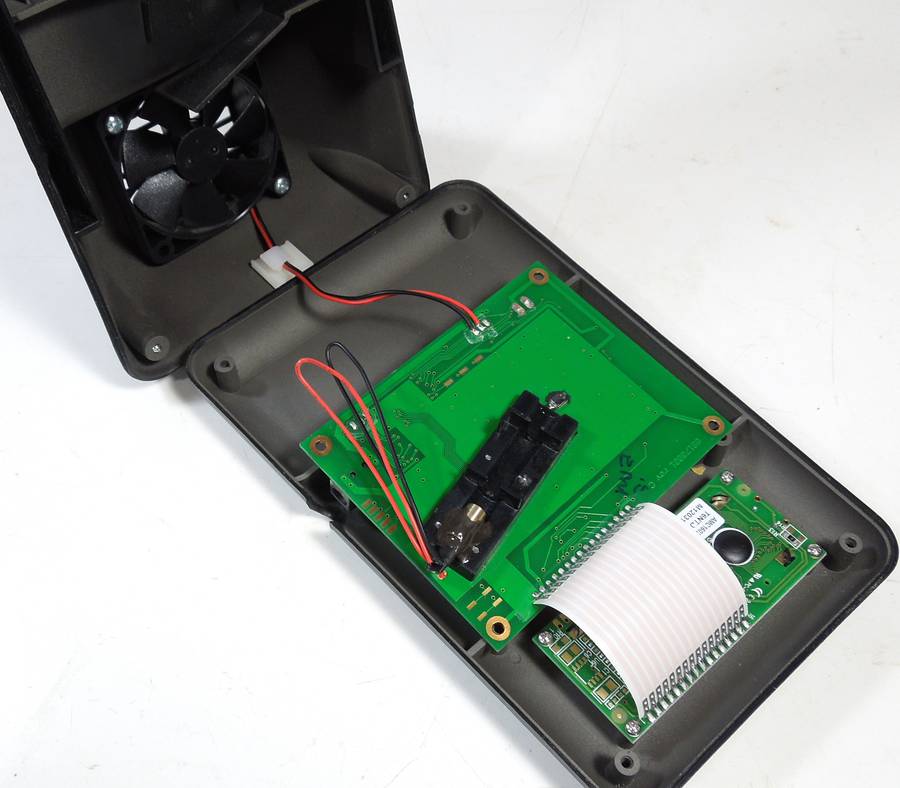 Here's the unit, popped open. The fan is attached to the back of the case.
The black thing on the green circuit board is a piece of plastic for holding the laser.
I think its main purpose is to prevent diffracted light from the laser beam's aperture
from getting to the detector.
Here's the unit, popped open. The fan is attached to the back of the case.
The black thing on the green circuit board is a piece of plastic for holding the laser.
I think its main purpose is to prevent diffracted light from the laser beam's aperture
from getting to the detector.
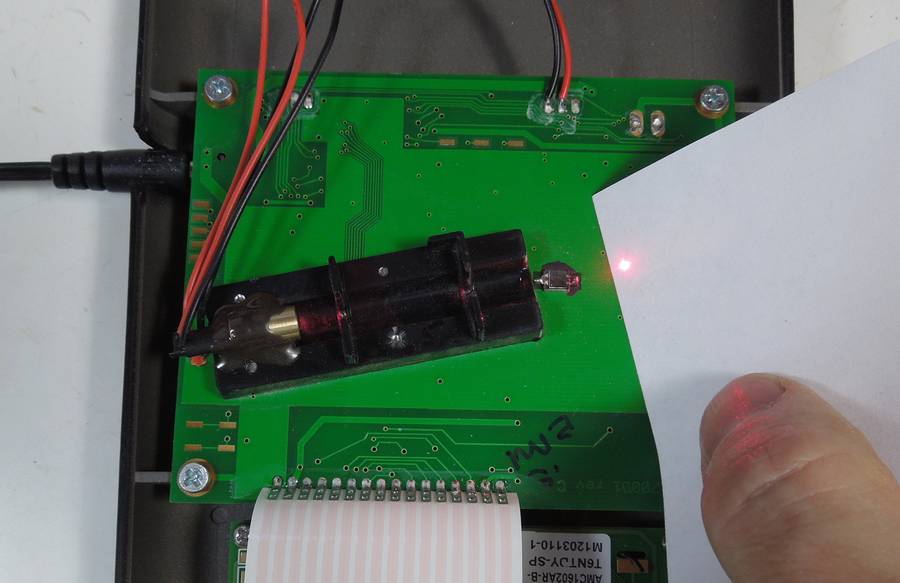 Plugged in, holding a piece of paper in the laser's path.
The laser is about as bright as a laser pointer laser. The small component between the piece of paper and the black thing that mounts the laser is a photo detector of sorts. The laser is focused to have the narrowest part of its beam right above the photo detector.
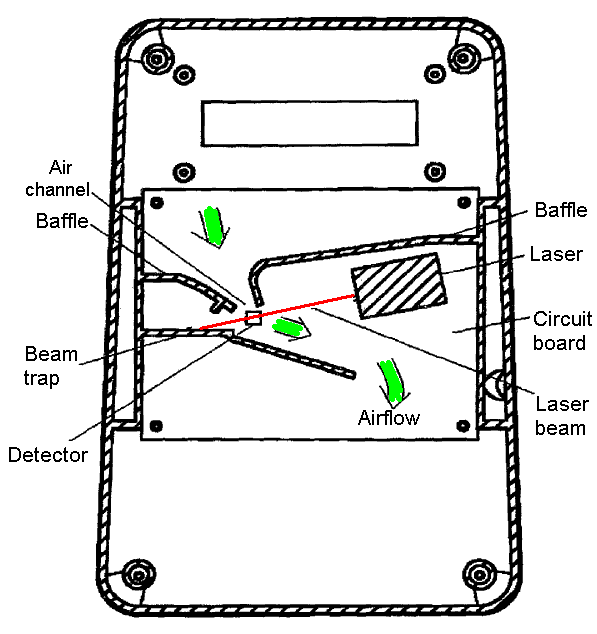 I looked up the patent number on the back of the unit, and found it here:
US patent 8009290
I looked up the patent number on the back of the unit, and found it here:
US patent 8009290
I re-labelled one of the drawings from the patent. The arrows, highlighted in green, show the direction of air flow.
Dust particles passing through the laser beam above the detector will deflect some of the light onto the detector. Larger particles will scatter more light, so particle size is gauged by the intensity of the pulse of light on the detector.
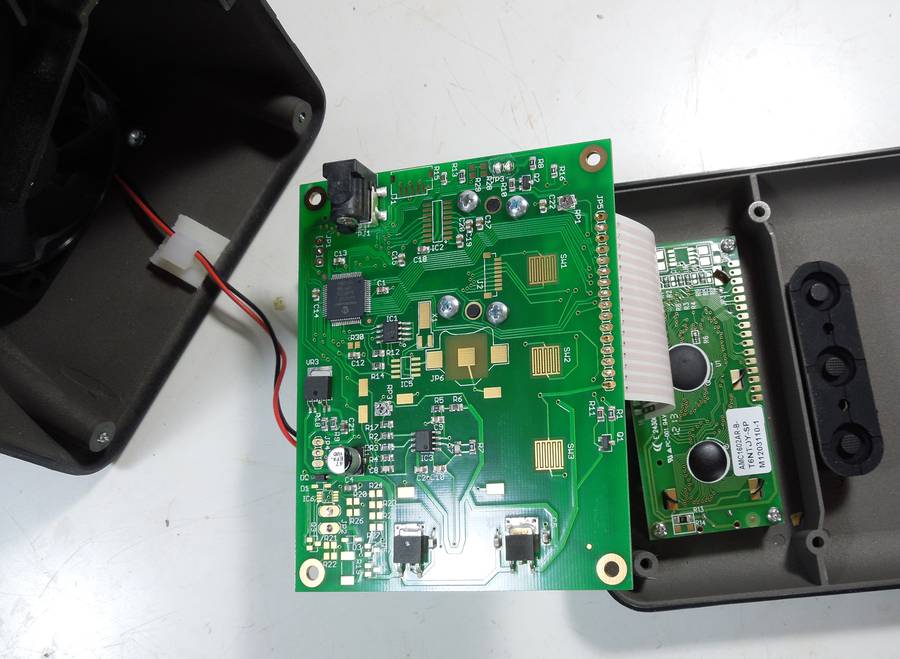 Unscrewing the main circuit board reveals the circuitry behind it.
A micro controller, some analog components, and the pads for the three buttons.
Unscrewing the main circuit board reveals the circuitry behind it.
A micro controller, some analog components, and the pads for the three buttons.
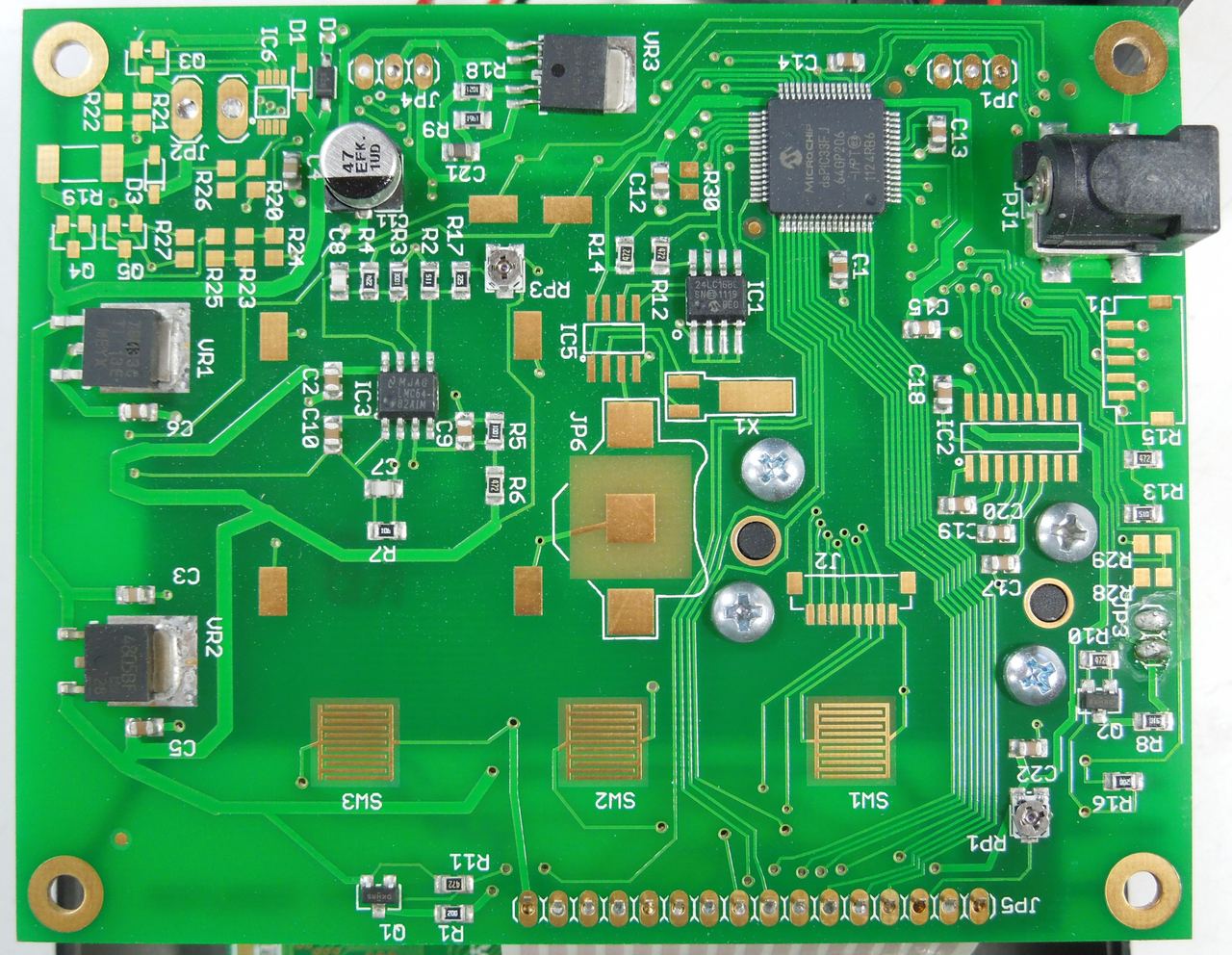 A close up of the main circuit board, for those who are curious as to what
the chip part numbers are (click to enlarge)
A close up of the main circuit board, for those who are curious as to what
the chip part numbers are (click to enlarge)
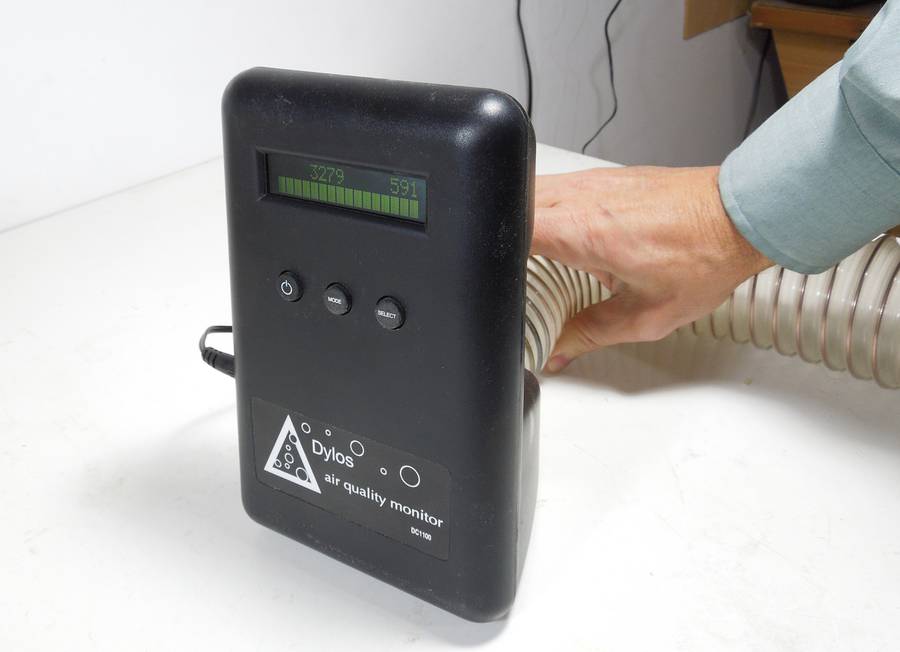 With just a CPU fan providing the air flow, the meter is not suitable for sampling fast moving
streams of air. Obstructing the air flow makes the counts go down, and increasing it makes
it go up. Here I'm using my dust collector to pull more air through the unit
than normal. Doing so tripled the readings on the meter. So varying the air flow rate
can definitely change the readings. The patent makes claims about gauging the
air flow rate by the pulse width from the particles, but either the Dylos software doesn't
implement this or it takes more time to adjust than I gave it.
With just a CPU fan providing the air flow, the meter is not suitable for sampling fast moving
streams of air. Obstructing the air flow makes the counts go down, and increasing it makes
it go up. Here I'm using my dust collector to pull more air through the unit
than normal. Doing so tripled the readings on the meter. So varying the air flow rate
can definitely change the readings. The patent makes claims about gauging the
air flow rate by the pulse width from the particles, but either the Dylos software doesn't
implement this or it takes more time to adjust than I gave it.
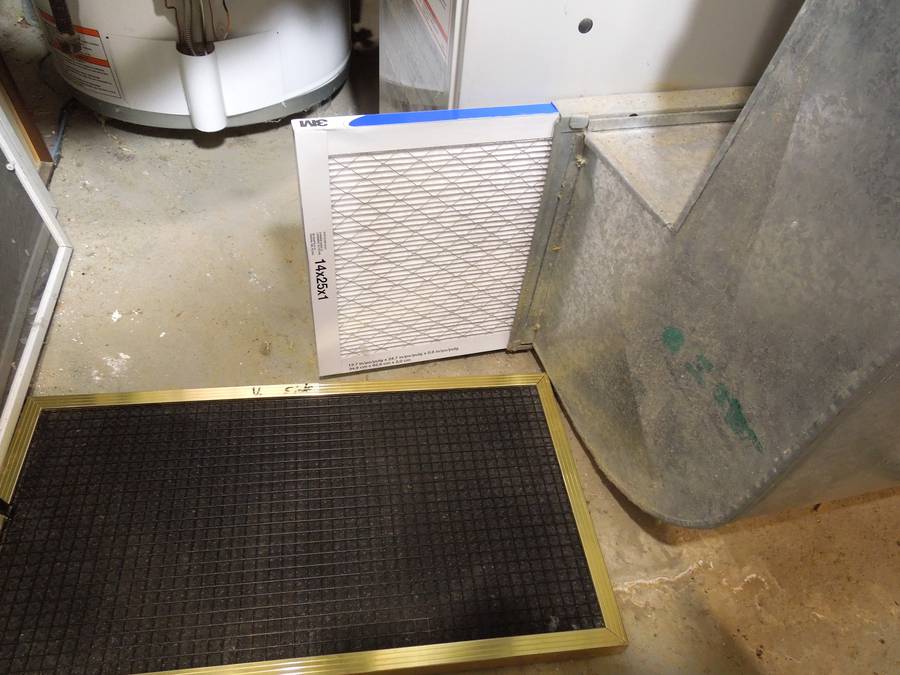 The nice thing about this meter is that it gives a numerical reading within about ten
seconds of powering it up, so it's good for comparative purposes. I used a fan
to blow air through my washable reusable furnace filter (on the floor in this photo)
and holding the meter on the other side of that filter, found the readings were
the same as for the room air. So the filter really wasn't capturing any of
the fine dust.
The nice thing about this meter is that it gives a numerical reading within about ten
seconds of powering it up, so it's good for comparative purposes. I used a fan
to blow air through my washable reusable furnace filter (on the floor in this photo)
and holding the meter on the other side of that filter, found the readings were
the same as for the room air. So the filter really wasn't capturing any of
the fine dust.
Even though the microparticle filter in my dust collector performed disappointingly, I bought another one of these fancy filters to try in my furnace. Blowing air through it with a fan, I found that it caught most of the fine stuff. And once I installed it in my furnace, I found the particle counts in my house went down significantly.
In fact, with the Dylos set to "monitor mode", I could see both the fine (0.5 to 2.5 micron) and coarse (2.5 micron and up) particle counts decrease every morning when the furnace came on to warm up the house.
So these microparticle filters really do work, at least when they are relatively new and used as intended.
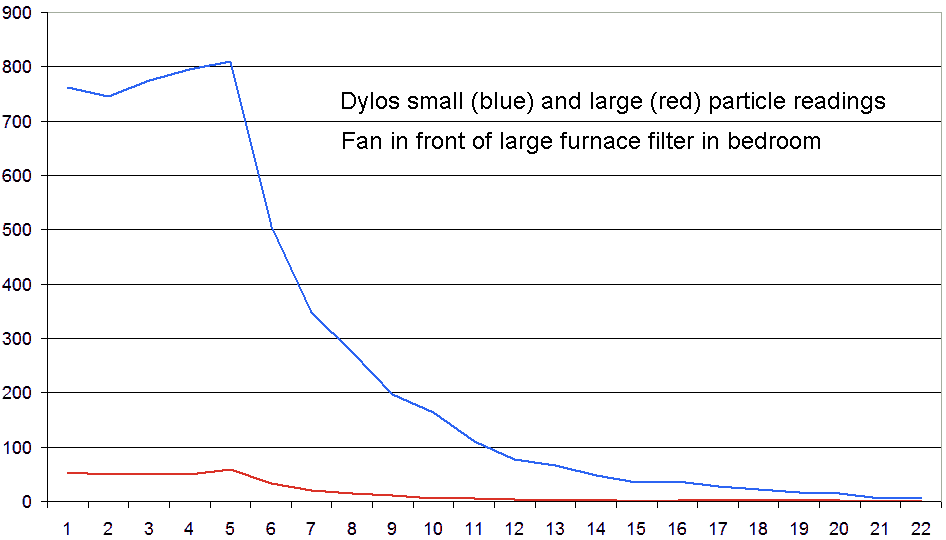
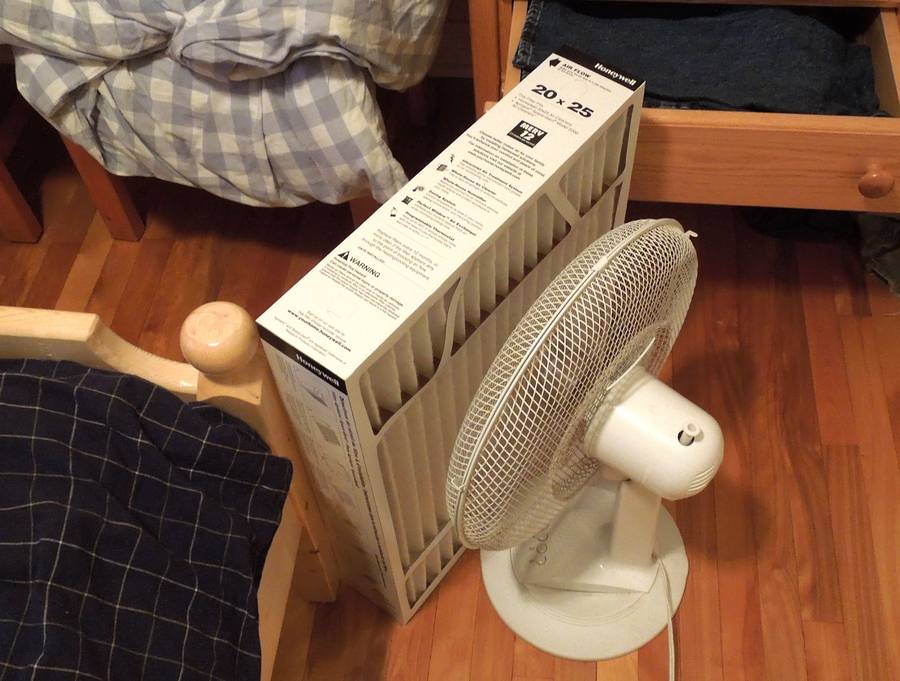 For experimenting, I also bought the biggest furnace filter cartridge I could find.
I found that just blowing air through it with a regular fan really
cut down on the particle counts in the room. After about 15 minutes like this
in my bedroom, the particle count dropped from around 800 and 60 (small and large particles)
to 15 and 0.
For experimenting, I also bought the biggest furnace filter cartridge I could find.
I found that just blowing air through it with a regular fan really
cut down on the particle counts in the room. After about 15 minutes like this
in my bedroom, the particle count dropped from around 800 and 60 (small and large particles)
to 15 and 0.
 At $30, this filter is still much cheaper than the cheapest air cleaner.
So if you suspect that an air cleaner could help you with allergy problems, buy
one of these big furnace filters and put it in front of a fan, just as an experiment.
At $30, this filter is still much cheaper than the cheapest air cleaner.
So if you suspect that an air cleaner could help you with allergy problems, buy
one of these big furnace filters and put it in front of a fan, just as an experiment.
I don't know how well these furnace filters work over time compared to HEPA filters in most air cleaners, but when they are new, just blowing air through them like that really works!
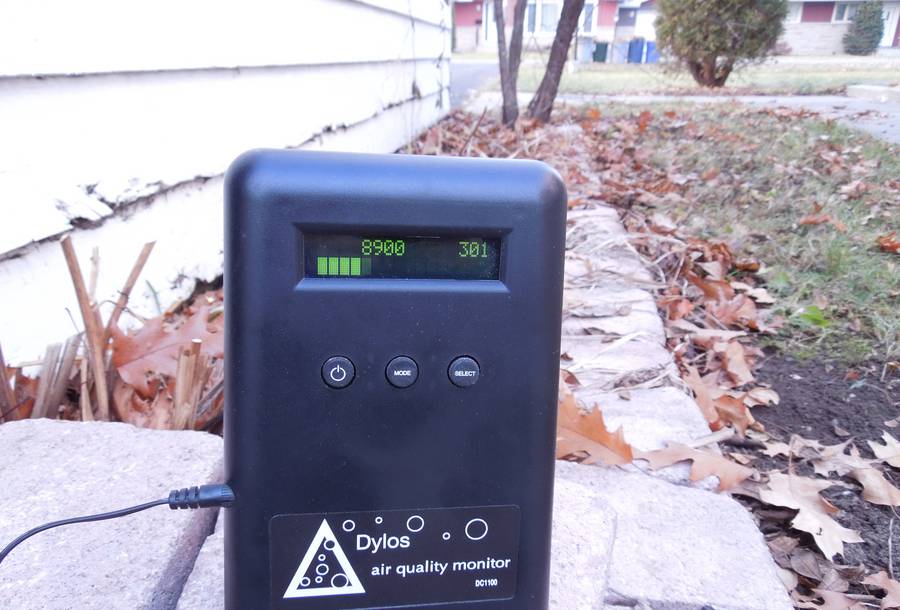 With my new furnace filter, typical readings indoors are about 300 of the 0.5 to 2.5 micron
particles. But I found day to day readings varied quite a lot.
A big source of variations, it turns out, was outside
air. On some days, the outside air read at about 9000 microparticles...
With my new furnace filter, typical readings indoors are about 300 of the 0.5 to 2.5 micron
particles. But I found day to day readings varied quite a lot.
A big source of variations, it turns out, was outside
air. On some days, the outside air read at about 9000 microparticles...
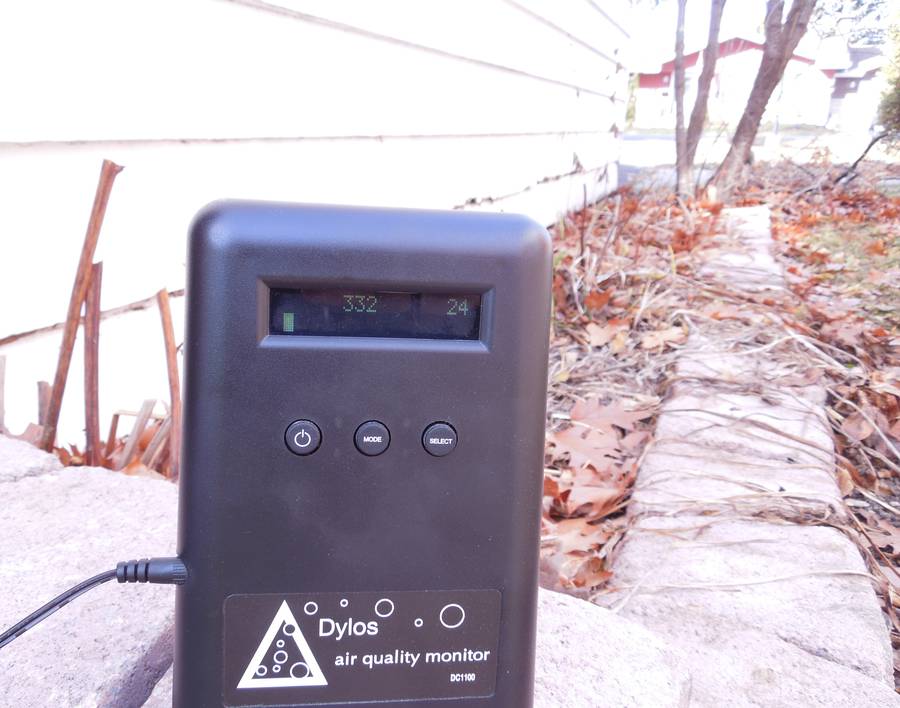 ... but sometimes, it was as low as 300. It all depends on wind, rain and
recent precipitation.
... but sometimes, it was as low as 300. It all depends on wind, rain and
recent precipitation.
 The Dylos confirmed that the air coming out of my small dust collector wasn't
terribly clean, giving typical readings of around 2000 and 600.
The microparticle filter, used this way just doesn't work that well.
Although a particle count of 2000 is not that bad while running machines.
Typical indoor air is often around 1000, and workshop air, when using power
tools, is usually higher.
The Dylos confirmed that the air coming out of my small dust collector wasn't
terribly clean, giving typical readings of around 2000 and 600.
The microparticle filter, used this way just doesn't work that well.
Although a particle count of 2000 is not that bad while running machines.
Typical indoor air is often around 1000, and workshop air, when using power
tools, is usually higher.
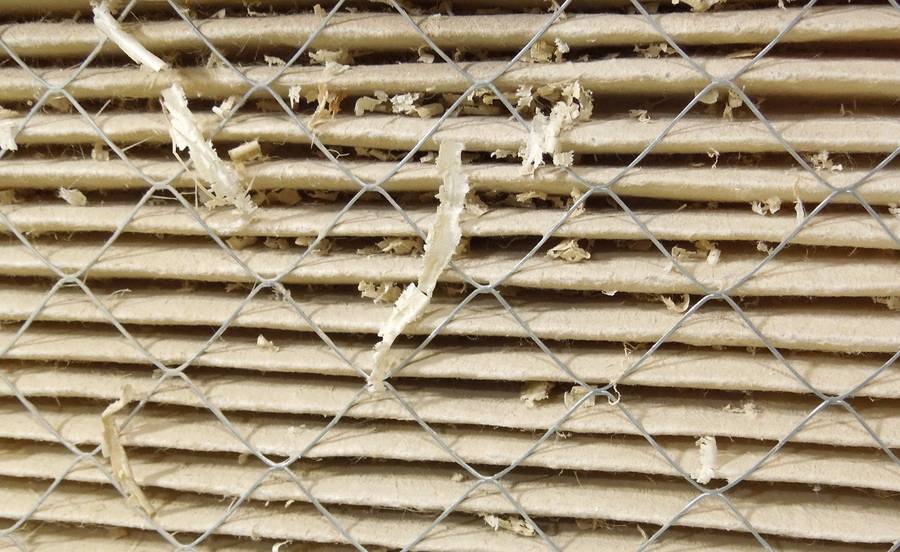 I'm hoping the filter will cake up over time to make the filter work better,
but this may or may not work. These microparticle furnace filters work by
attracting the microparticles with static electricity. Probably, once enough
dirt is in the filter, that mechanism breaks down.
I'm hoping the filter will cake up over time to make the filter work better,
but this may or may not work. These microparticle furnace filters work by
attracting the microparticles with static electricity. Probably, once enough
dirt is in the filter, that mechanism breaks down.
My guess is that true HEPA filters are impractical for furnaces, because HEPA filters have very fine pores and create too much air resistance for a furnace. Certainly, with all the fancy terms used to describe the more expensive filters, none claimed to be a HEPA filter.
But in the mean time, this pleated filter, even not working as designed, is still my best option for my small dust collector.
 I revisited my friend Bill Price's workshop
to sample his dust collectors.
I revisited my friend Bill Price's workshop
to sample his dust collectors.
He has some box fans, with cheap furnace filters in front of them in his garage workshop where he does wood turning. In front of the furnace filters, he has pieces of paper towel to catch some of the coarse dust. The particle count in his garage was more on the high side.
He also has a cheap Mastercraft dust collector from Canadian Tire, so we powered it up to see if it made a difference.
That dust collector uses a bag that looks like it's made of some sort of canvas for the filter. But, according to the Dylos, that bag was only removing a small fraction of the fine dust from the air.
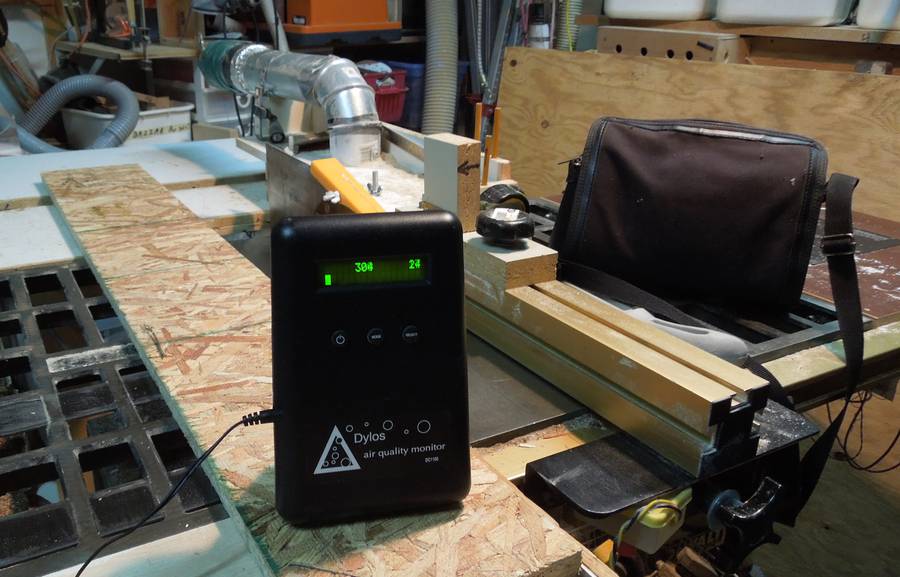 But in Bill's backyard shop, where he keeps his ShopBot CNC machine, the particle count was
really low, around 300 and 25.
But in Bill's backyard shop, where he keeps his ShopBot CNC machine, the particle count was
really low, around 300 and 25.
Bill said he was milling some gears out of plastic earlier that day, and my guess is that milling the plastic didn't make a lot of dust, but pulling the air through his dust collector in that shop still removed most of the regular airborne dust. That dust collector uses the better quality filter bags.
To put things in perspective, the particle count in Bill's back yard that evening was 3000, about the same as in Bill's garage workshop.
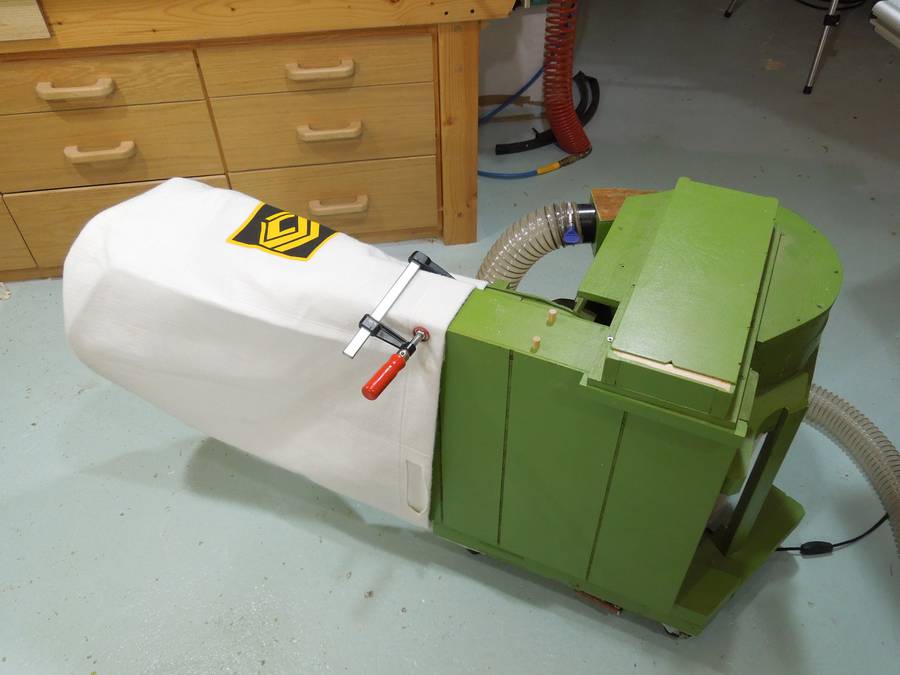 So bought a small replacement filter bag from Busy Bee tools, the same style as on Bill's
better dust collector. This bag is supposed to filter to about 1 micron.
The bag is made of some felt-like material.
So bought a small replacement filter bag from Busy Bee tools, the same style as on Bill's
better dust collector. This bag is supposed to filter to about 1 micron.
The bag is made of some felt-like material.
As far as I can tell, it doesn't work as well as advertised but blowing air through it does reduce the small particle counts. So for the time being, I stuck it over the air outlet on my small dust collector, fixed in place with a clamp. The air coming out the filter bag reads about 300 particles, so the bag catches a lot that the furnace filter doesn't catch.
The filter bag only cost about $26. Had I known what I know now, I would have designed my dust collector to use one of these in the first place. Or maybe I should try to make a pleated filter from that bag.
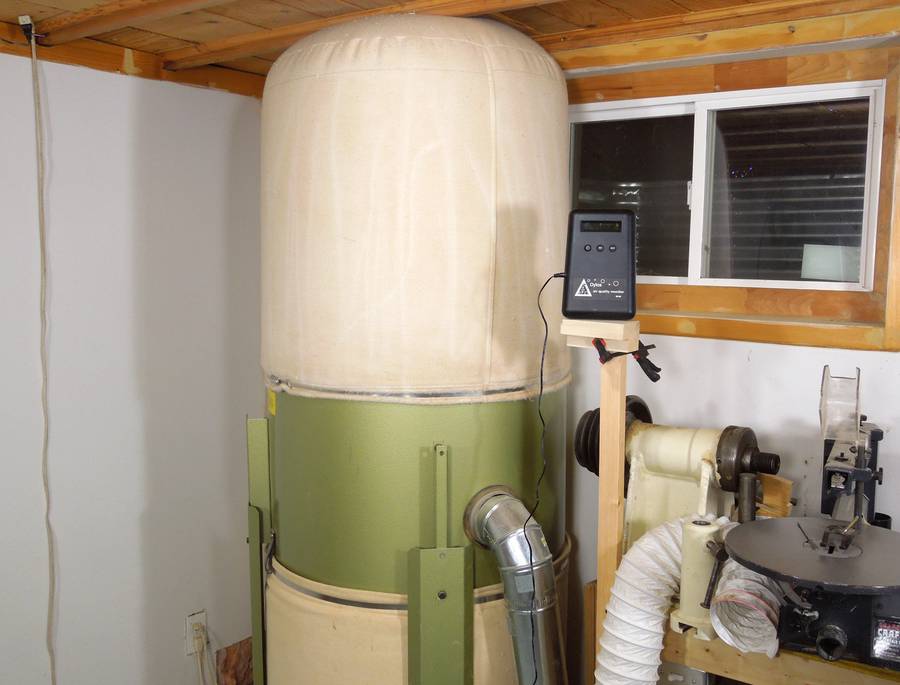
 I wasn't expecting my big dust collector to perform terribly well. The fitter bag on it is
just covered with dust, and if I run my hands along the inflated bag, I can see
a cloud of dust released from it.
I wasn't expecting my big dust collector to perform terribly well. The fitter bag on it is
just covered with dust, and if I run my hands along the inflated bag, I can see
a cloud of dust released from it.
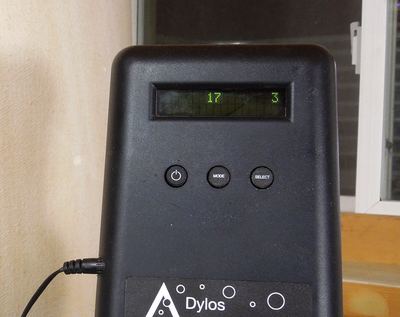
When I start it, it also releases a cloud of dust as the bag inflates. But once it's running for a minute, the readings on the Dylos really drop. After about four minutes, the Dylos, right next to it, will read counts below 50! But if I as much as stroke my hand across the filter bag while it's running, the counts go up immediately.
Still, with a storm of dust going on inside that bag, the air coming out of it has a much lower particle count than outside air. Makes you wonder whether venting your dust collector to the outside, as Bill Pentz suggests, is always a good idea.
 Most filters get more "efficient" at filtering out dust particles over time, a process
that is referred to as a filter getting "seasoned". A filter isn't really like a sieve, more
like a tangle of fine fibers that particles get caught in. As all the largest pathways
through the fibers get plugged up with larger particles, only smaller pathways remain,
which in turn trap more of the particles.
Most filters get more "efficient" at filtering out dust particles over time, a process
that is referred to as a filter getting "seasoned". A filter isn't really like a sieve, more
like a tangle of fine fibers that particles get caught in. As all the largest pathways
through the fibers get plugged up with larger particles, only smaller pathways remain,
which in turn trap more of the particles.
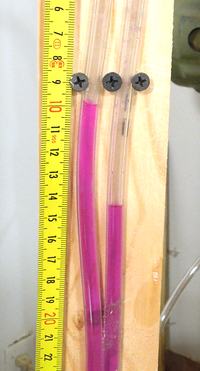
"Efficient" is a relative term though, because as the filter's air pathways become smaller, it develops more air resistance. So for the same airflow, the filter will produce increasing amounts of back-pressure.
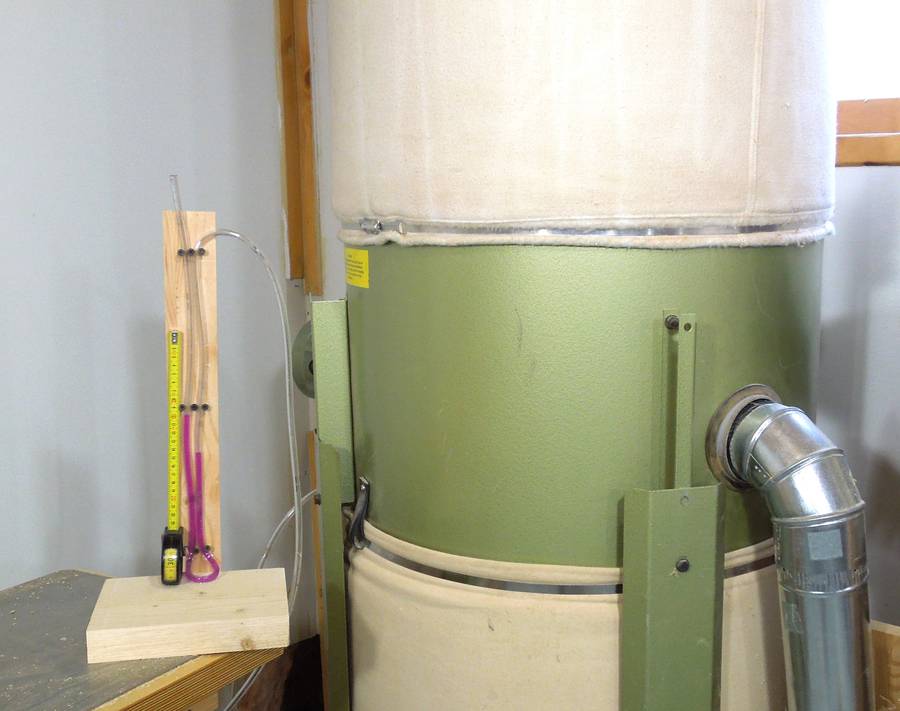
I measured the pressure inside my dust collector at 45 mm water. Definitely higher than any other air filter I have, but then again, still much less back-pressure than the cyclone alone on my homemade small dust collector. Given that this filter does not need a cyclone upstream, 45 mm of back-pressure is not bad.
A reader, Daniel Chernoff, wrote to me that he has the same model of Dylos that I have, plus various dust collection equipment. I figured this would be a good opportunity to get some comparative readings, so here's some of Daniel's readings:
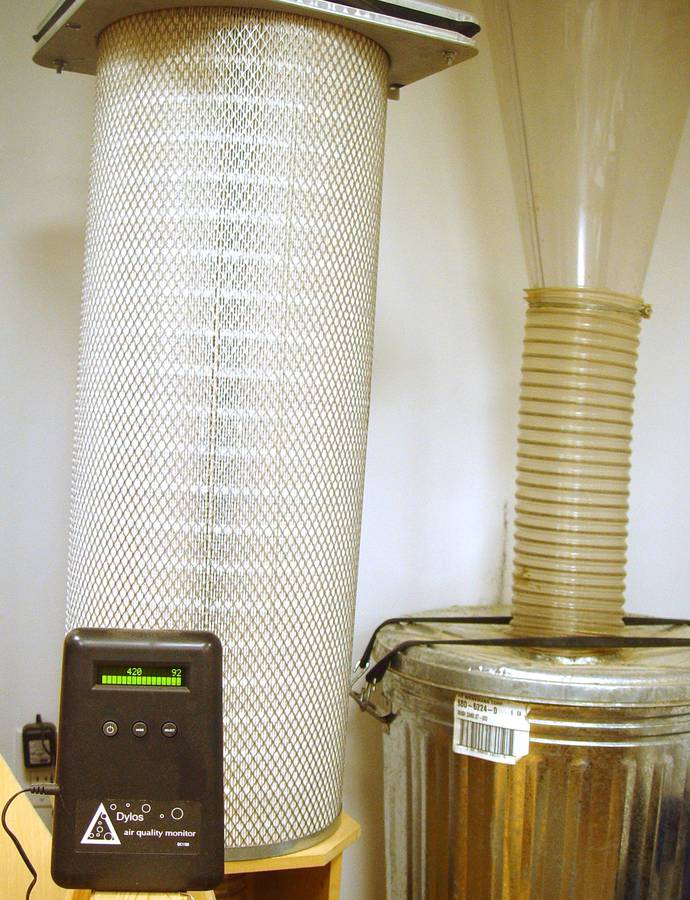
For his dust collector, which is a ClearVue cyclone with six year old Wynn cartridge filters on the output. The baseline reading in the undisturbed shop is around 93 and 33 (< 2.5 micron and > 2.5 micron). With the Dylos right by the filter, the readings went up to 300 and 40 when the dust collector was turned on, then settled back down to around 250 and 5. Then using the chopsaw (connected to the dust collector) to make about ten cuts in hardwood, the readings went to 401 and 39. Two minutes later, the readings went back down to 327 and 37.
Daniel also cleaned out the inside of his canister, but the particle counts coming out of it were higher after cleaning it. That is my experience as well - any disturbance of a filter, including cleaning it, will, at least for a while, cause it to release more particles.
Comparing Daniels's measurements to my measurements with my large bag dust collector, and Bill Price's bag dust collector in his backyard shop, suggests that pleated filters aren't necessarily better than a good quality filter bag.
Daniel also disconnected the filter to see how the cyclone alone would do. This emitted a cloud of dust blown out from the filter, with readings going up to 20,000 and 10,000, though four minutes later, that settled back down to 1100 and 300.
I'm pretty sure that cyclones alone are ineffective at separating the fine dust. The spinning air inside a cyclone is subject to on the order of 100g of acceleration, but the air only stays in the cyclone for about one second. Assuming particle separation rate is proportional to acceleration or gravity, that would suggest that any dust that can stay suspended in the air for over a minute will also make it through the cyclone.
In fact, I'm getting less enamored with the idea of a cyclone. The coarse dust that a cyclone separates out will also relatively easily fall out of a filter bag. Those low-tech dust collectors with a filter bag on top and a collector bag on the bottom look better all the time.
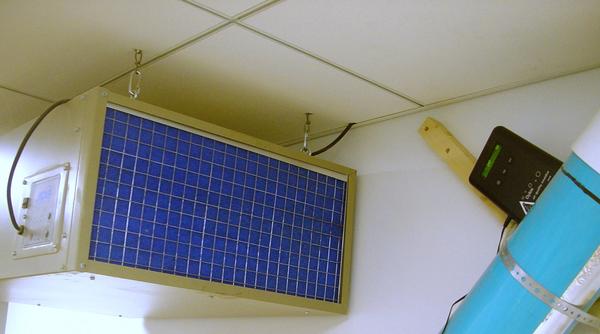 Daniel also tested it next to his JDS air cleaner. The blue filter is the output side
of the air cleaner. After five minutes of running, the Dylos was reading 140 and 16.
With the air cleaner turned off, it then settled back to around 250 and 40.
Daniel also tested it next to his JDS air cleaner. The blue filter is the output side
of the air cleaner. After five minutes of running, the Dylos was reading 140 and 16.
With the air cleaner turned off, it then settled back to around 250 and 40.
 Daniel also has a IQAir HEPA air cleaner.
After five minutes of running, the Dylos read 92 and 17. Daniel says
"From experience if I let the HEPA cleaner run for hours I can get the
particle count even lower, usually around 15 and 0".
Daniel also has a IQAir HEPA air cleaner.
After five minutes of running, the Dylos read 92 and 17. Daniel says
"From experience if I let the HEPA cleaner run for hours I can get the
particle count even lower, usually around 15 and 0".
In the mean time, I find myself wondering if maybe I'm getting paranoid. If the reading in my workshop goes up to 5000, I think it's too high, but if it hits 9000 outside sometimes, well, that may not be good, but it's just a fact of life. And if I make toast or fry something in a pan, the particle counts in my kitchen easily hit 10,000. One time, after cooking up a storm, I saw a bit of a haze hanging in the air, and the Dylos read 40,000 and 3000. And I assume it goes higher still if the smoke detector goes off.
All this paranoia is from reading Bill Pentz's pages. One thing that Bill Pentz does not mention directly on his website is that he has wood dust allergies. Having wood dust allergies certainly changes the situation a lot, but most of us don't have wood dust allergies.
I don't smoke, but I imagine once the air gets thick enough to see the smoke hanging in the air, the particle counts would be much higher. Yet smokers inhale the stuff directly from a cigarette. Sure, it kills some of them eventually, but given how thick the inhaled smoke is, it surely takes a lot to kill a person!
And, of course, some particles are more harmful than others. On this subject, I exchanged some emails with Dwight A Kaufman, a doctor who emailed me with his comments. Here are some of his emails below. Food for thought!
Hi, Several years ago I attended an Occupational Medicine Continuing Education Conference at the University of Cincinnati. The main subject was Occupational Lung Disease. I asked one of the lung specialist if wood dust cause lung disease. He answered "No" with no hesitation or reservation. Some people do develop an allergy to wood which may aggravate their asthma or hay fever.
Dwight A. Kauffman MD
Our airway, windpipe and bronchi, divide 17 or 18 times before reaching the terminal air pockets where oxygen oxygen and carbon dioxide exchange takes place. In about the first half of these bronchi, there is a constant production of mucus that is continually moving up to remove dust, bacteria, etc.
Most wood dust is trapped in this mucus and removed. Tobacco smoke goes all the way out to the air pockets and some comes back out. Some gets trapped.
Asbestos and silica are inorganic material that can be small enough to get in where the removal system doesn’t work. And being inorganic, the body cannot break them down.
The risk of lung disease from asbestos is greatly exaggerated. For 15 years I worked in a community that had had a factory that made asbestos brake and clutch linings. During those 15 years I did not see or know of anyone with the kind of lung cancer asbestos is supposed to cause.
I did my Internship in western Pennsylvania and saw lots of people with Black Lung disease.
Tobacco smoke damages the airways, thus chronic bronchitis. It also damages the air pockets, thus emphysema. These usually occur together and that is known as COPD.
In chronic bronchitis, the wall of the bronchi are damaged, so that when a person coughs or breaths hard, the airway collapses and traps air. In emphysema, the air exchange pockets that are normally like a bunch of grapes break down and look like an apple, loosing lots of surface area for oxygen exchange with the blood.
COPD is almost totally due to tobacco. Asthma is due to inflammation and causes swelling, increased mucus production and spasm, but does not cause the structural damage that tobacco smoke does.
When a company that makes air filters puts a picture of a chest X-ray in their ad, that is scare tactics.
Air filtration is primarily for comfort and esthetics, not health.
Ninety percent of chronic lung disease and cancer are preventable since they are caused by tobacco.
Asthma and allergies are treatable, and should be treated vigorously.
Dwight A. Kauffman MD
The factors are particle size and organic vs. inorganic. In general, dust gets trapped in the mucus and removed. Non-smoking farmers who work in lots of dust have clean lungs.
There has been a lot of publicity about second hand smoke, but the smoke inhaled from fires, stoves, and other's cigarettes is minuscule compared to what the smoker gets.
Most smoke and a lot of vapors are so irritating that we do not stay in them long enough to be harmed. Carbon monoxide is an exception.
Another occupational problem was the artificial butter flavor used in popcorn. The manufacturer found problems in their workers and protected them but did not advise his customers, therefore a big law suit by those down stream.
A new concern I heard expressed by a lung doctor regards the "nano" particles which go right through cells. That's an unknown area.
Nicholas Levin-Koh also sent me this link:
Wood dust exposure and risk of lung cancer.
Unfortunately, this is
on of those websites where it costs $30 to read the full scientific paper,
but going by the abstract, there doesn't appear to be any risk for hobbyists,
though having a job in a sawmill does pose health risks.
Further thoughts on reaction to the above
Including the quote from Dr Kauffman has produced quite the reaction from people, people telling me I should fix the incorrect conclusion and be more scientific. I suppose that is to imply repeating what everyone else says is more scientific.
It appears that by quoting Dr Kauffman, and suggesting that wood dust is less harmful than some people make it out to be is violating some taboo. And taboo topics are not subject to rational discussion.
To illustrate what I mean about taboo topics, Think of trying to analyze and discuss rationally anything that is fundamentally politically incorrect. Politically incorrect conclusions are not allowed to be true, and anybody who goes against the consensus is subject to be labeled as a heretic up front, because participating in analysis of such topics might conclude something not allowed, so best not to go there. Easier to just label those who question as heretics or other form of something-ists. I think of the up-front dismissal of controversial ideas as an adult version of a small child pressing their hands against the ears and shouting "la la la, I can't hear you la la la".
If you are up for more thought about this topic in general, there is an excellent essay by Paul Graham: What you can't say Warning - a bit of a long read.
 Building a small dust collector (version 1)
 Small dust collector
 Mini dust collector
 Photographing
 How much dust from a miter sw
 Mini tornado experiment
 Air cleaner using
 Another air cleaner