Beginning woodworking
This article also avalable in Spanish, Russian
French and German
A question I'm sometimes asked is how to get into woodworking,
what tools I would recommend, where to start.
I can't really make good recommendations as to what specific brands of tools
are better than others.
Most of my tools were opportunistic purchases, with little regard to
specific brands. More often than not, it's price and a quick inspection
to gauge the solidity of the tool that are the determining factors.
My tools are usually not among the best that can be had, but good enough.
Where to start?
But where to start with woodworking? What machines do you need?
My suggestion is that you should start by doing some woodworking, and only
after that start buying big equipment.
I don't mean that entirely literally.
But I think it's best if you buy just a few tools and start using those.
As you get more comfortable with what you have it becomes easier to
understand what tools you should get next. That way you don't end up
buying a workshop full of tools only to find out that you aren't really
into woodworking.
Start by getting a few hand tools - a hammer, screwdrivers, nails, a few chisels,
a hack saw, a try square, some sort of work table and some clamps.
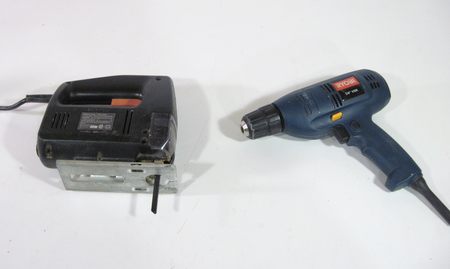 Your first power tools should probably be a drill and a jigsaw. Those are tools
that come in handy here and there even if you aren't into woodworking.
You won't be able to make any fine furniture with them,
but it's enough to bang together a few projects for the basement or outside.
Your first power tools should probably be a drill and a jigsaw. Those are tools
that come in handy here and there even if you aren't into woodworking.
You won't be able to make any fine furniture with them,
but it's enough to bang together a few projects for the basement or outside.
There are different grades of tools available at different prices.
Salesmen will tell you to get good quality tools that last a lifetime.
But a good quality tool can easily cost four times as much as a cheap one.
My advice is to get cheap tools first and use them until they break.
Once they break, it's time
to consider getting something better. Unless you are a professional who
uses the tools every day, even a cheap tool is likely to last a long time.
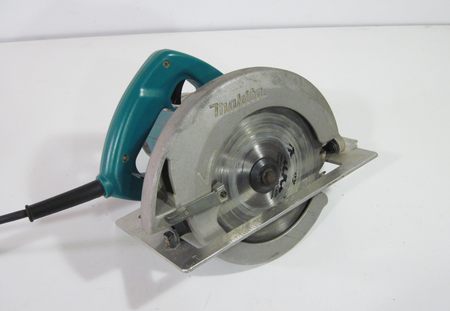 A good tool to get next is some sort of circular saw. A circular saw
cuts a lot faster than a jigsaw, and it's easier to make a straighter cleaner cut
with it. It's also a very useful tool for cutting up big sheets of plywood, even
if you already have a table saw. At this point, you have enough tools for some
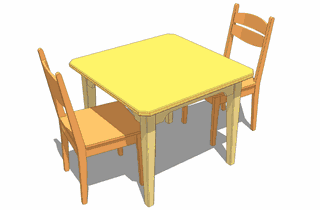
simple projects such as this table or some
storage shelving
A good tool to get next is some sort of circular saw. A circular saw
cuts a lot faster than a jigsaw, and it's easier to make a straighter cleaner cut
with it. It's also a very useful tool for cutting up big sheets of plywood, even
if you already have a table saw. At this point, you have enough tools for some
simple projects such as this table or some
storage shelving
You should consider getting a hand plane
or two at this point, and maybe a workbench
with a vise on it. It may be a good challenge to
build a workbench while you are at it.
You may also want to invest in a doweling jig,
or a pocket hole jig (although I'm personally not very fond of pocket holes
joinery because it's not very strong)
With just the tools mentioned above, you can already tackle some basic
projects, such as these:
Getting into stationary machines
 You can get a lot of hand-held power tools, but after
getting the assortment mentioned above, it's time to consider some stationary tools.
You can get a lot of hand-held power tools, but after
getting the assortment mentioned above, it's time to consider some stationary tools.
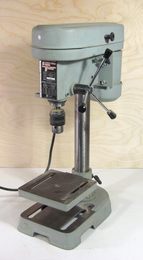
The most useful stationary tools are a drill press and a table saw. For
the longest time, I only had a cheap old contractor saw, and only a very small drill
press, but I made do with those. The difference between a good drill press
and a cheap drill press is much smaller than the difference between a cheap drill
press and no drill press, so don't wait until you can afford the perfect one.
I can't say the same about a table saw. The cheapest benchtop table saws
for under $200 tend to be awful, and will never produce a good clean cut.
The more expensive benchtop saws are better, but still not as good as a contractor
saw with a cast iron top or a hybrid table saw. And some can cost as much as
a hybrid table saw.
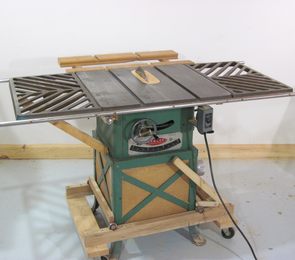
An old style contractor saw is the type of table saw with the motor hanging off
the back and with legs that go to the floor.
They tend to be made of cast iron, and good value for the money
used, but less common new as most people buy benchtop saws or hybrid table saws
nowadays. Most contractors today use benchtop saws, so the term "contractor saw"
can be confusing.
Hybrid saws are essentially built like the old contractor saws, but with the
motor in the cabinet, just like a cabinetmaker saw.
They are much cheaper than cabinetmakers saws and not as heavy.
The saw at left is my first table saw,
a 40-year old contractor saw, which I enclosed on the bottom to keep the sawdust
inside. At present, I use a hybrid table saw
To get a cleaner cut on a table saw, it helps to buy a good quality saw blade
for your table saw. With a decent table saw, and a good quality blade,
it should be possible to get a cut that is smooth enough that it should
require only minimal work to prepare it for finishing.
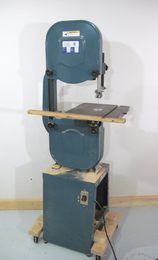 Table saw, drill press and bandsaw were all I had when I built my
marble machine one. I use those tools the most.
Table saw, drill press and bandsaw were all I had when I built my
marble machine one. I use those tools the most.
A nice thing about a bandsaw is that it's not scary to use. Sure, a bandsaw can cut your
fingers off too, but it will probably cut your finger slow enough that you can pull it
back before it's a major injury. I cut into my thumb with a bandsaw once when I was
a kid. I pulled back as soon as I felt it, and the cut on my thumb wasn't even deep
enough to warrant a band-aid. So if table saws scare you, get a bandsaw first.
Bandsaws are very handy. They cut cleaner than jigsaws, but one of the biggest
advantages of a bandsaw is convenience. It's my tool of choice for making most
quick rough cuts. I also use it for cutting up long scraps to short pieces to fit them in the
scrap box. I actually bought my bandsaw before I bought a table saw - I saw one marked
down at a woodworking show, and I knew I'd get one eventually, so I jumped on it.
That was before I built my first or many bandsaws
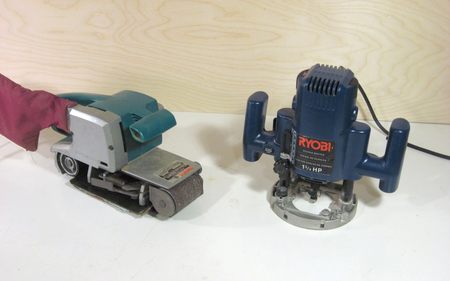 Next it's probably time for some more handheld power tools. A belt sander often comes
in handy. A router is also a really nice thing to have. Don't fret too much
about which router to get - most woodworkers have more than one. So if you don't
like some aspect of your router, it will still be handy as a second router if you upgrade.
Next it's probably time for some more handheld power tools. A belt sander often comes
in handy. A router is also a really nice thing to have. Don't fret too much
about which router to get - most woodworkers have more than one. So if you don't
like some aspect of your router, it will still be handy as a second router if you upgrade.
Most people would also recommend that you get some sort of miter saw for
making crosscuts. Personally, I have always just used a
crosscut sled. Miter saws just don't have the rigidity to produce a cut
as clean as can be made with a table saw sled, so I have never been a fan of them.
Dust collection on miter saws is typically not very good.
A lot of people use random orbital sanders. They sand cleaner and slower than belt
sanders, but the sanding pads are easy to change.
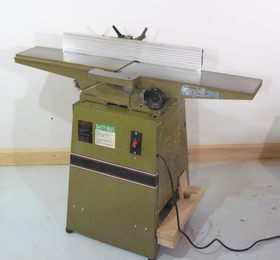 Moving up to the next level, the next machine to get would be a
jointer planer.
A jointer planer is very important if you want to glue up pieces of wood side-by-side
to make panels. It's just plain all around handy for planing stock. I'd recommend
you get a jointer planer before you get a thickness planer, because there is so much
more that can be done with a jointer than a thickness planer. A thickness planer
is really handy to get stock to the right thickness, although in a pinch, that can also
be done on the table saw by putting the workpiece between the fence and the
blade. If you cut from both sides, you can thickness stock up to twice the maximum
depth of cut of your table saw.
Moving up to the next level, the next machine to get would be a
jointer planer.
A jointer planer is very important if you want to glue up pieces of wood side-by-side
to make panels. It's just plain all around handy for planing stock. I'd recommend
you get a jointer planer before you get a thickness planer, because there is so much
more that can be done with a jointer than a thickness planer. A thickness planer
is really handy to get stock to the right thickness, although in a pinch, that can also
be done on the table saw by putting the workpiece between the fence and the
blade. If you cut from both sides, you can thickness stock up to twice the maximum
depth of cut of your table saw.
Tools I don't recommend buying too soon
All the tools below have their uses, and you may eventually get to a point where
they are needed. But if you are just starting out, I'd recommend waiting until
later before buying any of the tools below:
Cordless tools
Cordless tools are very handy, and I love my cordless drills.
However, if you are just dabbling with getting
into woodworking, and you may only use your tools every six months, you may find
the batteries dying prematurely. Lithium ion batteries used in cordless tools
slowly self-discharge. If left fully discharged for months, they become
permanently damaged. If you use a cordless drill until the battery is low and
put it away without recharging, then try to charge it again a year later,
you may find the battery no longer able to take a charge.
Your first tools should be corded tools.
They are much cheaper, more powerful, and always work when you need them.
Compound sliding miter saw
Hardware stores are full of big compound sliding miter saws. But before you buy one,
ask yourself, how often do you need to cut miters on stock wider than a non sliding
miter saw can handle?
For the few times you have to do that, it's probably better to use a
circular saw. The complicated mechanism of a compound sliding miter saw makes
them bulky and less rigid. An expensive compound miter saw will not
make as clean a cut as you can with a table saw sled.
Do everything combination machines
Avoid machines that can be converted from one function to another. The ShopSmith
was a prime example of such a machine.
Multi purpose machines are usually good at one or two functions but other
aspects are compromises. But the real problem is that every time you need to
switch functions, you need to convert the machine, and that takes time.
The cost of these machines is usually high enough that you
could get several single function machines for the same price.
Pre-built workbench
If you want to get into woodworking, a good project to tackle is building your own
workbench. It's really not that hard. So if
building your own workbench is a bit
too much work, or too intimidating, then take a step back and examine whether you
really want to get into woodworking. This may be different if your goal is to
cut silhouettes of kittens out of plywood with a scrollsaw, but I consider
scrollsaw work more "craft" than "woodworking".
Nail gun or brad nailers
Furniture shouldn't use a lot of nails. If you must use nails, you can always
drive them in with a hammer. I am sure you have heard the saying
"if all you have is a hammer, every problem looks like a nail".
Now, if you have a nail gun then... Well, go figure.
Fancy table saw miter gauge and fence
Fancy miter gauges sure look nice, with all the coloured bits of anodized aluminium
and brass knobs. But are those really something you need? Do you really think that
an Incra brand miter gauge made out of bent sheet metal is more trustworthy than the
more solid cast aluminium one that came with your saw? Sorry, but those are some
of my pet peeves. Build yourself a good
table saw sled instead, and you won't need
to second guess it. If you cut a lot of 45-degree miters, make another sled with
a 45 degree angle.
Scrollsaw
Scrollsaws are good for projects like cutting puzzles or silhouettes
of cutesey animals out of wood. But for making furniture, scrollsaws just
aren't very useful.
Scrollsaws, along with Dremel tools, have their uses in crafts, but they
are too limited for wooworking projects.
That said, Dremel tools are very useful for sharpening brad point drill bits,
forstner bits,
and bandsaw blades,
so they do have a use in woodworking.
Lathe
You can make nice candle sticks and bowls with a lathe. If your aspiration
is wood turning, get a lathe. But few funtiture
projects require the use of a lathe. I'm not saying you should never
get one, but a lathe is not one of those "must have" tools like a table saw
or drill press.
Track saw
A track saw will allow you to make many cuts that would otherwise require
a table saw, and is hard to beat if you need to cut up whole sheets of plywood.
But for the price of a track saw, you can buy a table saw, and table saws are
so much more versatile and convenient for everything else.
If you are just starting out, don't let anybody tell you that you don't
need a table saw if you have a track saw. Save the track saw purchase for later.
What to do next
Well, that concludes my introduction to woodworking for beginners. For more information
follow some of the links in the article - they are all relatively easy projects.
You can also watch some of my
woodworking videos on YouTube. to get a better sense of how I work.
Ther are also many more woodworking videos on YouTube
So have a go at it. Who knows where it might lead. Maybe some day you'll
have a workshop like this one
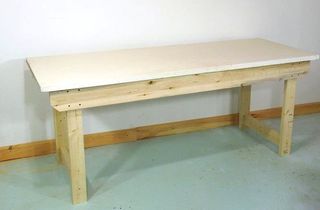 Simeple sturdy workbench build
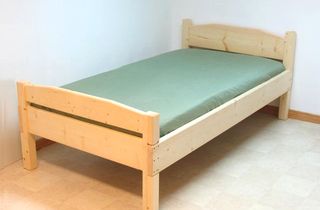 Bed from 2x4 lumber
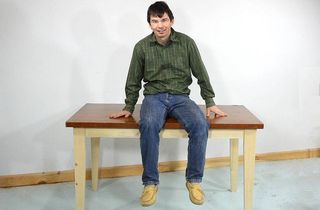 Simple table
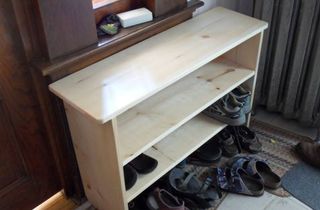 Shoe rack
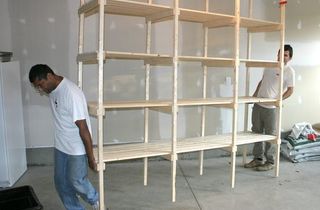 Storage shelves
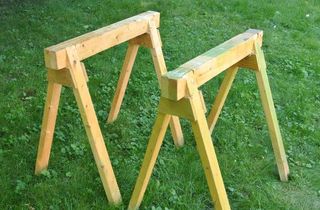 Building sawhorses
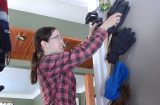
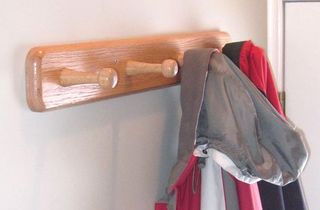 Coat hooks
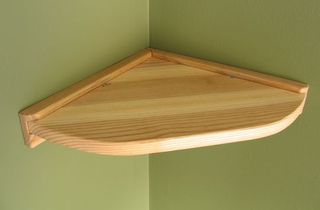 Corner shelf
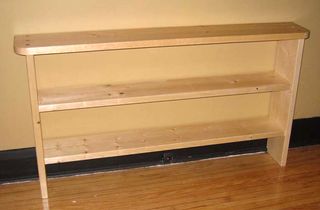 Low bookshelf
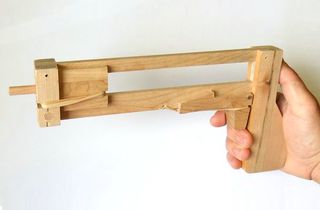 Building a jenga pistol
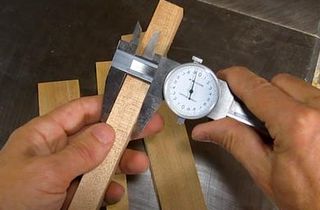 precise cuts on the table saw
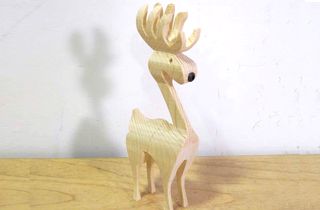 Bandsaw reindeer
 SketchUp tutorials
 Woodworking plans
 Wood shop tricks
 A simple varnish
 Beware of Ted's
 Shaun's tractor bunk bed
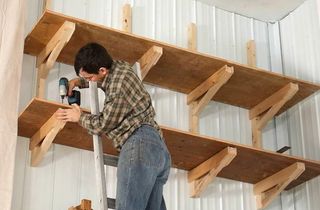 Up-high garage shelves